Friday October 9, 2026 10:00am - 11:00am CDT
Across the world, communities are navigating intensifying collective stress: war, displacement, polarization, ecological instability, historical distortion, and prolonged uncertainty. This panel discussion explores resilience as the capacity of individuals, communities, and institutions to maintain coherence, identity, and ethical judgment while undergoing transformation and crisis.
Drawing on our work in Ukraine we understand mental health and resilience not only as psychological but embedded in political, epistemic, and relational realities. In times of war, what stands out, what is ignored, and what is deliberately obscured shape how societies respond and effect mental health as well as societal resilience. Attempts to rewrite the history of the invasion, or to suggest that Ukraine bears meaningful responsibility for the violation of its own territory, reveal a deeper pattern: the deliberate curation of darkness, where parts of reality are made unavailable, memory is distorted, and responsibility is blurred. This becomes even more urgent when AI systems are trained on polluted, selectively weighted, or politically distorted data, turning old human practices of denial and distortion into new technological instruments on unprecedented scales.
Grounded in research on resilience in contexts of man-made collective trauma, the discussion will approach resilience as an emergent capacity of interconnected systems: individual regulation, relational trust, cultural meaning-making, drawing on practice-based approaches from trauma integration, presence, and collective healing explored by the Pocket Project.
The conversation will be anchored in the practical example of the Ukraine Resilience Circles, facilitated by young people themselves. Since 2022, the initiative has evolved from direct trauma relief toward training young local facilitators and building peer-led spaces of support. The project has documented more than 5,320 individual sessions, 375 group sessions, and 330 Resilience Circles, with preliminary evidence of resilience growth across intervention types.
Using a complexity-informed lens, the panel will explore three human capacities essential in war for resilience and mental health that AI cannot do and are essential: salience: to notice what stands out; sapience: how wisely we think; and sentience: whether we can feel, experience, and care.. Participants will be invited into a dialogue on how communities, institutions, and leaders can support coherence, connection, truthfulness, and adaptive capacity during ongoing crisis.
Speakers 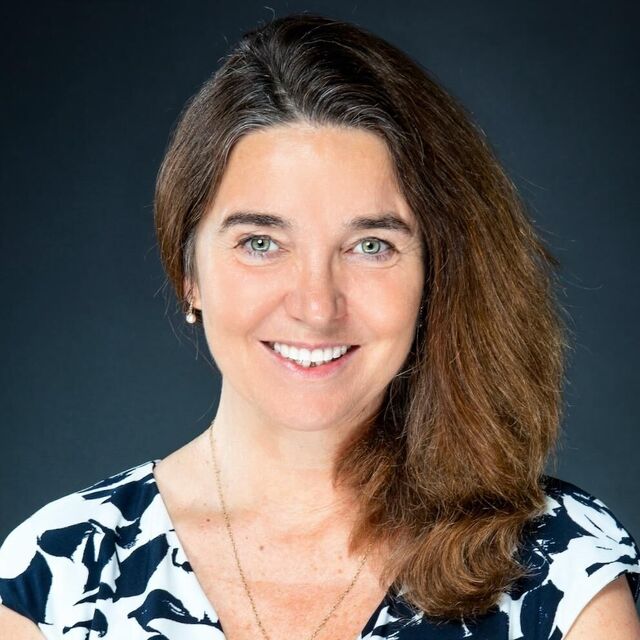
CEO, Pocket Project
Kosha Joubert is the CEO of the Pocket Project, where she works closely with Thomas Huebl and a global team to grow a culture of trauma-informed care. Kosha is an expert facilitator, coach and organisational development facilitator who has worked on systems regeneration, trauma-informed lea...
Read More → 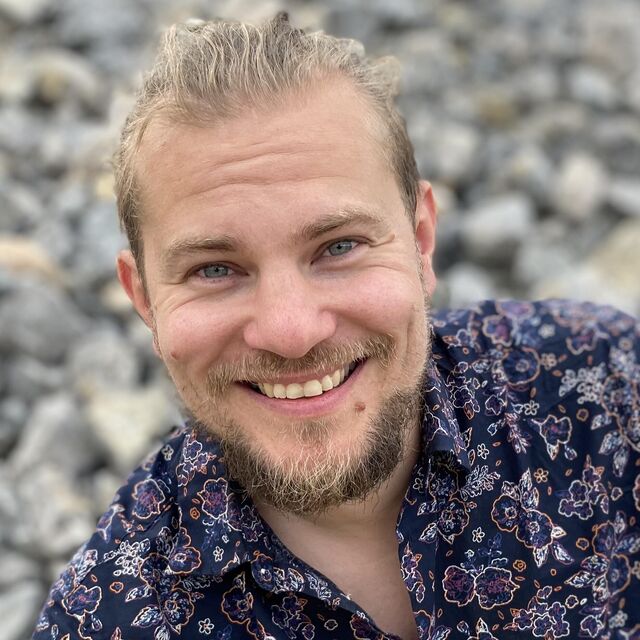
Researcher (currently working on a PHD), Universität Witten/Herdecke & Pocket Project
Adrian Wagner, Social Worker, works at the intersection of applied complexity and emotional attunement, holding space for both individual and collective blind spots with care and discernment. He is a researcher with The Pocket Project and collaborates with Complexity Partners as a consultant.Over the past 15 years...
Read More → 
Ukraine Trauma Relief project manager, Pocket Project
Daria Yemets is a psychologist and researcher, born in Kharkiv, Ukraine. She works in the field of collective trauma and aims to address the transgenerational trauma transmission and to maintain historical truth in Ukraine. Currently, is working in alliance with the Pocket Project, developing...
Read More →
Friday October 9, 2026 10:00am - 11:00am CDT